Uncategorized

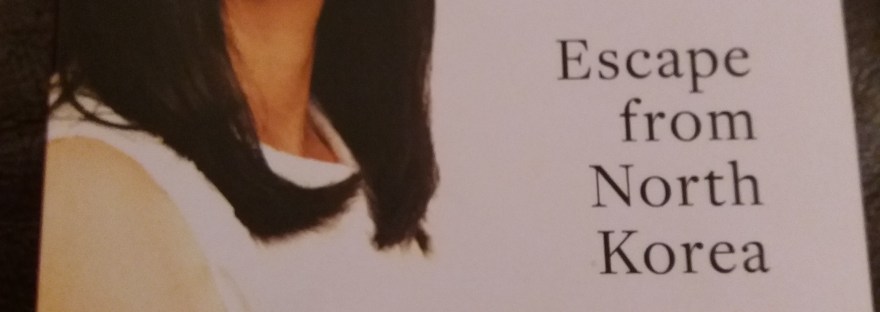
Refugee Week Book Blog: The girl with seven names by Hyeonseo Lee

I came across this book thanks to a subscription to the Shelter Box Book Club. Hyeonseo Lee’s account gives an insight into a country that keeps much of its way of life shut off from the eyes of the world.

Hyeonseo recounts her childhood growing up in a relatively wealthy, well-connected family. Her family lived in a border town and as they move to a new house, they look out onto a river and on the other side, China. Her early life seemed “normal”. She tells of her schooling and of the groups session where students would be encouraged to denounce each other. But while life seems “normal”, there are also some sinister undercurrents. She witnesses her first public execution aged 7 and during the famine that hit North Korea in the 1990s, she sees widespread poverty and hardship.

Living so close to the Chinese border, her mother becomes skilled in trading on the black market, smuggling items in from China and selling them in North Korea. 17-year-old Hyeonseo hears of others crossing the border and slipping back and the temptation to try it, just once before starting college, becomes too much. One night with the help of a friend, she crosses into China without telling her family. Unbeknownst to her at the time, she will never return to North Korea again.

News of her escape begins to spread and it becomes apparent she would be placing her family in danger by returning. What follows is a journey across China as an illegal immigrant, stopping for periods of time to work and live before her past catches up with her and she is forced to move on once again. Eventually she decides to leave this life of hiding behind her and hatches a plan to seek asylum in South Korea, catching a plane to Seoul and announcing her intention to seek asylum.

Having been granted asylum and now settling into life in South Korea, Hyeonseo returns to that same border she once crossed, to smuggle her mother out of the country. Due to an issue as her mother crosses, her brother ends up crossing too and now the journey begins once again, this time to bring her brother and mother to safety.

While this is an incredible story of bravery and determination, I was really interested in the sections where Hyeonseo discusses adapting to life outside North Korea. As the successful asylum seekers are released into South Korean society, they go through a training course on what to expect. Her mum really struggles with her new life, so much so that she considers returning home. While we may wonder at this decision, it is one that according to the book, some people ultimately choose. Hyeonseo explains that for those who suffered immense hardship and suffering, life outside is a relief. But for those who were relatively well-off and knew how to work the system, while life in North Korea wasn’t perfect, life outside can be a struggle. North Korean education is viewed as all but worthless and Hyeonseo’s mum ends up working as a cleaner with little prospect of bettering herself. As someone who commanded respect in her hometown, this is difficult to swallow.

It really is a fascinating read and I learnt a lot through this book about an area of the world I know very little about. If you are interested in hearing more, this YouTube video shows Hyeonseo speaking at the Perth Writers Festival.

Back to Refugee Week Book Blog

Uncategorized

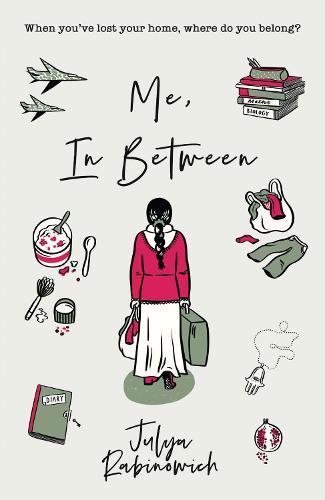
Refugee Week Book Blog: Dazwischen: ich by Julya Rabinowich

Today’s book is one of my favourites. This is a young adult book from Austria, which rightly won the 2017 Österreichische Kinder- und Jugendbuchpreis (Austrian Children’s and Young Adult Book Prize).

***This book is now available to buy in English.***

Me, In Between, by Julya Rabinowich, translated by me, published by Andersen Press

The story begins like this:

Wo ich herkomme? Das ist egal. Es könnte überall sein. Es gibt viele Menschen, die in viele Ländern das erleben, was ich erlebt habe. Ich komme von Überall. Ich komme von Nirgendwo. Hinter den Sieben Bergen. Und noch viel weiter. Dort, wo Ali Babas Räuber nicht hätten leben wollen. Jetzt nicht mehr. Zu gefährlich.

Where do I come from? That isn’t important. It could be anywhere. There are many people in many countries who live through what I have lived through. I come from everywhere. I come from nowhere. Beyond the seven mountains. And much further still. A place where Ali Baba’s thieves wouldn’t want to live. Not anymore. Too dangerous.

What a way to begin a book!

In her debut book for young adults, Rabinowich depicts Madina’s arrival in a new country and the struggles she now encounters. These are not just the physical difficulties regarding language and the conditions where she lives, but also the pull of family and tradition against the desire to discover more about her new surroundings and engage with her new friends. As the narrative unfolds, we are offered glimpses of the journey she has undergone to reach this point and the life she has left behind. Madina is a strong female protagonist who must ultimately work out a way for her family to stay in their new country, pulling together the women in her family and those around her to ensure their safety.

This narrative is a moving account of the difficulties faced by young people as they arrive at their destinations. We never discover where Madina comes from and other than the references to learning German, we never learn where she has arrived. For young people across Europe, who are coming into contact with new arrivals from distant lands, this book opens their eyes to what life may be like for their new schoolmates and neighbours. A particular favourite passage is this one, which tells of how some days, Madina can’t get in the bathroom to have a shower before school and how her friend, Laura, helps her out:

Wir haben jetzt ein Seifenversteck ins Klo gemacht, damit es nie wieder passiert. In der dritten Kabine vom Mädchenklo ist eine Kachel in der Wand locker. Dahinter hat sie eine kleine, in rosa Papier verpackte Seifenkugel versteckt, und ich schleiche in der ersten Stunde auf die Toilette und wasche mich mit dieser kleinen Seife, die so toll nach Rosen duftet, als würde ich in einer Wanne voller Blumen baden. 

We’ve made a hidey-hole for some soap in the toilets so that it never happens again. In the third stall of the girls’ toilet there’s a loose tile on the wall. Behind it, she’s hidden a little bar of soap, wrapped in pink paper, and I sneak out to the toilet during the first lesson and have a wash with this little bar of soap that smells so sweetly of roses, as if I had bathed in a whole tub of flowers.

At a time when we here in the UK seem to be closing our borders and shutting people out, this book can help our young people to understand and welcome those who so badly need our support.

Book Two is now available in German – Dazwischen: uns. You can read a short extract of it in English here.

For more World Kid Lit titles, you can also visit the World Kid Lit blog.

Back to Refugee Week Book Blog
Uncategorized

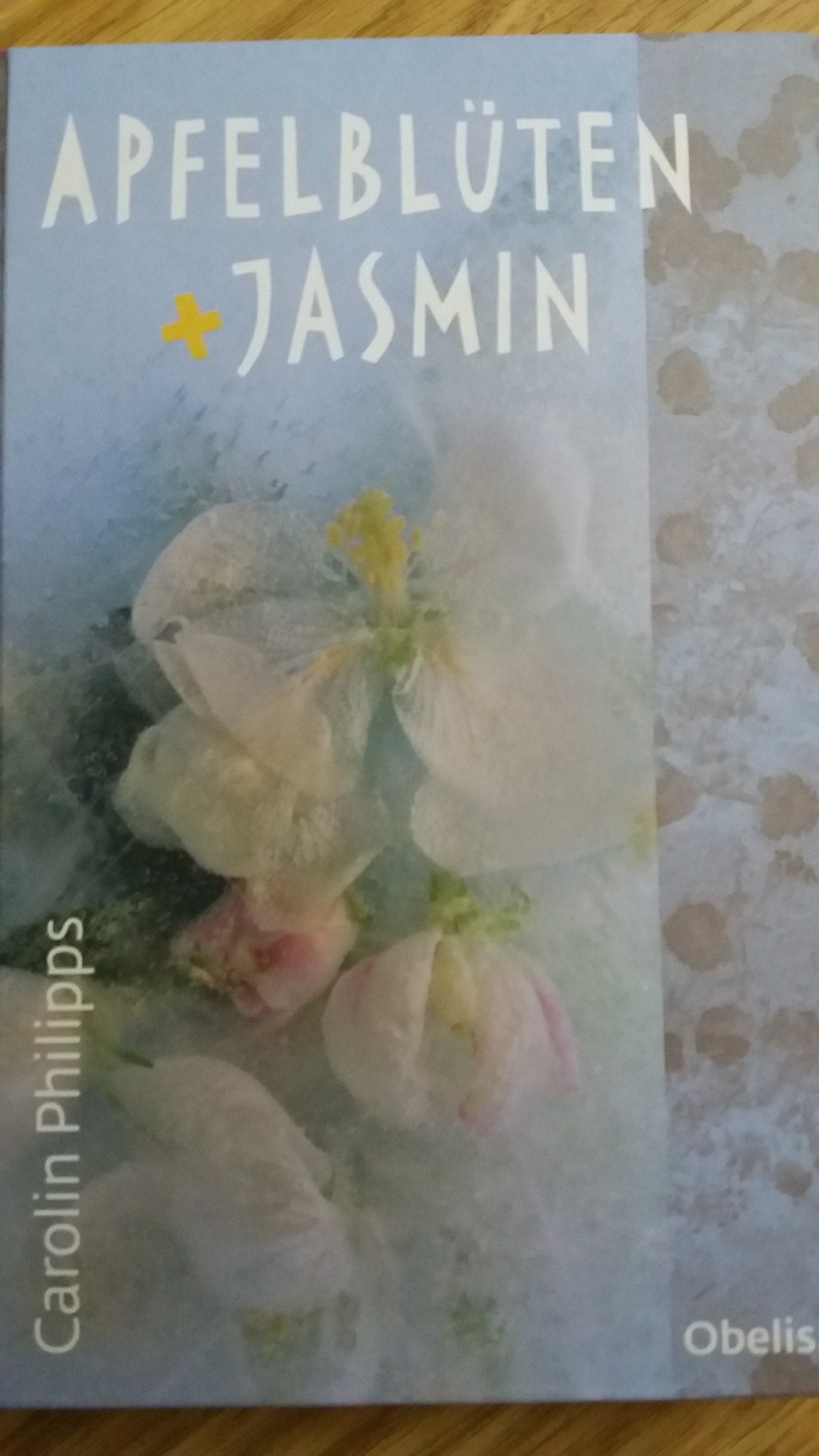
Refugee Week Book Blog: Apfelblüten und Jasmin by Carolin Philipps

In the opening pages of this German fictional novel, we encounter Talitha, a 16-year-old Syrian refugee who, it transpires, is at risk of being deported. In order to stay, she has to tell her story. Written in the first-person, it is an account of her journey and how she has become separated from the rest of her family during her journey. Her father was left behind at a border relatively early on in their journey, her mother and younger brother end up registering in Austria as her brother has fallen ill. Talitha continues on to Germany alone.

As she registers for asylum in Germany, she registers with a false date of birth, believing that her passage will be easier if she is 18. She quickly realises her error and then has to try and prove her status as a minor. With her mother registered for asylum in Austria, and her own registration having taken place in Germany, EU law will not allow either party to cross the border until their applications are complete. Talitha is completely alone.

After living for some time in a hostel, she is taken in by a friend’s family; however the family’s son is anti-refugee and frames Talitha for a fire at the family farm. Talitha faces a choice whether to destroy her friend’s family by telling the truth of who actually set the fire, or whether to take the rap for it and face deportation. In the end she chooses to flee the family home, leaving her testimony in an envelope that she slides underneath the son’s bedroom door as she leaves.

I love the title of this book – the jasmine representing her past while the apple blossoms represent her future. One of the things I particularly like about this book is how it takes specific factual events and focuses on the effect this event has on the refugees living in Germany. A terrorist attack takes place in France and the refugees in Germany feel the backlash. It also suggests the idea of ignorance as a key factor for xenophobia and fear. As the son becomes more informed about Talitha’s background and experiences, he becomes more sympathetic to her cause.

This would be another great addition for our English book shelves!

For more World Kid Lit titles, you can also visit the World Kid Lit blog.

Back to Refugee Week Book Blog

Uncategorized

Refugee Week Book Blog: Butterfly. From Refugee to Olympian, My Story of Rescue, Hope and Triumph by Yusra Mardini

Before I read this book, I had a certain perception of who refugees were. This book really opened my eyes.

Yusra Mardini hit the headlines when she competed in the swiiming events as a member of the Refugee Team at 2016 Olympic Games in Rio de Janeiro. Originally from Syria, this book is her story of her previous life in Syria and how all that changed. She fled from Syria, boarding a small dinghy headed for Greece. When the boat’s engine cut out still a distance from shore, her and her sister, as swimmers, slid into the water and pushed the boat to land.

Not to downplay this heroic act, Yusra herself comments, it is this feat that the journalists always hit upon and want to know more about. However, this book tells of more than simply this courageous act. It tells of the people Yusra and her family used to be and tells of the people they become as they begin their new lives in Germany. It outlines the difficulties of accepting charity when it was once you doing the giving.

It was this book that made me realise that the people fleeing lived very similar lives to ours – they had computers, they went out to restaurants, they had money. She is quite clear when she states that those fleeing on boats are the ones who can afford to pay the smugglers. Those who have no money cannot escape as her and her family are able to. It makes me reflect on what we would do if this were to happen here…

An amazing account of determination and drive and another example of a personal story behind the facts and figures.

Back to Refugee Week Book Blog

Uncategorized

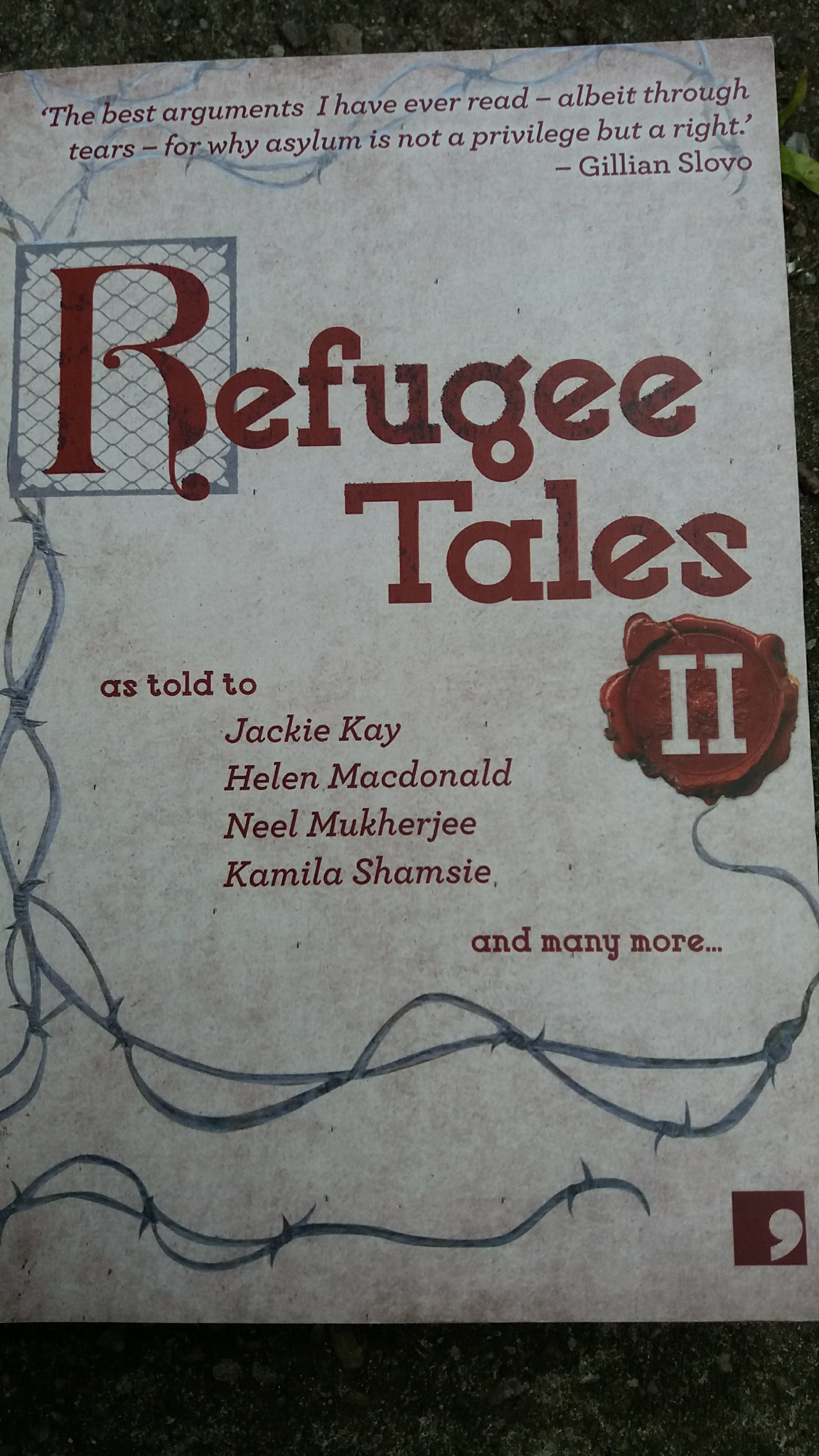
Refugee Week Book Blog: Refugee Tales

Refugee Tales Volume 2

At the beginning of June, I went to the Derby Book Festival event about Refugee Tales. During the event, Patrick Gale and Marina Lewycka spoke about the Refugee Tales project and the experience of producing this book. The book I am reviewing today is the third volume in the series, telling the stories of people who have been detained by immigration. Most of the stories relate to people held in the UK; however there are also stories from further afield.

As background to this collection, the Gatwick Detainees Welfare Group (GDWG) is a group of around 70 volunteers who visit and befriend people being held in the Gatwick Detention Centre. One of the shocking facts that I learnt at the Book Fair event, is that the UK is the only country in Europe that detains people indefinitely under immigration rules. The GDWG is campaigning for an end to indefinite detention. One of their outreach projects is Refugee Tales.

This series of books aims to give a voice to those who have been detained, raising awareness of the impact of detention on people’s lives. They take their inspiration from the Canterbury Tales and the idea of journeying. People who have left detention are introduced to writers who then write their story. Writer Patrick Gale described himself as a vessel, a scribe to whom a story is told to put down on paper.

The tales themselves are heartbreaking. They tell of a man who becomes a father, who within 14 hours of his son’s birth is taken from his room in detention for deportation, saved only by a technical problem with the aircraft. They tell of a young man who has spent his teenage years in England, who, once he turns 18, has to reapply to remain in the UK. He can no longer work. He can longer study. He is detained and after many requests for a single phone call, is eventually allowed to call his girlfriend to say he can’t collect her daughter from nursery. They tell of a pregnant lady, passed from person to person while she tries to receive appropriate medical care. They tell of an educated man who “disappears” in the system. Stories of an incompetent system, of seeing a different person at every meeting and of unprepared officials.

The way people’s lives are turned upside down in the blink of an eye is incredible. Someone turns up to sign in and instead they are detained, without their belongings, without a word to anyone. It has been eye-opening to hear how people are treated by the authorities in our own country and I feel indignant and angry on their behalf. One detainee asks: “I heard that you had human rights in the UK, but where are those rights?” This is another book to read and then pass to someone else to raise awareness of how people are treated in our country.

The other thing that Refugee Tales does is organise a week long event called “Walking with Refugees”. This year the group is walking from Brighton to Hastings in solidarity with refugees. Each day culminates in the telling of one of the tales. For more details, please see their website.

This third volume of Refugee Tales goes on sale in July and is available here. Many thanks to Comma Press for the advance copy.

Back to Refugee Week Book Blog