Blog

Uncategorized

World Kid Lit Challenge Day Six

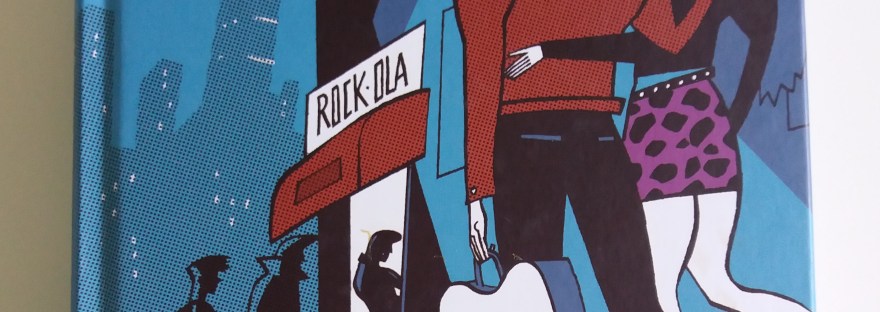
Today I’d like to introduce an award-winning* Spanish young adult novel that is yet to be translated into English: La sonrisa de los peces de piedra by Rosa Huertas (Anaya). This was recommended to me some time ago by children’s bookshop, El Búho Lector in Oviedo, and I have to say, it was a great recommendation.

The book follows Jaime who, on the death of his Grandfather, discovers that his mum has kept a secret from him his whole life: the identity of his father. The story takes place in the modern day with Jaime working to uncover the truth, helped by a diary he has found that his mother is writing. The diary entries transport us back in time to Madrid of the 80s, to a period known as “la movida madrileña”, the post-Franco era when Spain was transitioning to democracy.

Website Madrid Uno describes this period of time as follows: “In parts of Madrid the changes were profound and certain parts of the city erupted into a hedonistic and cultural wave of events. Things got wild. Pornography exploded, gays and prostitution, both previously brutally repressed, began to become very visible and there was widespread use of recreational drugs by the youth.” (http://www.madrid-uno.com/society/movida.htm)

It is against this backdrop that Jaime’s mum is writing her story which Jaime now reads, learning things about his mum that he had never imagined, hoping ultimately to discover who his father is. I won’t spoil the ending for you, but I loved the suspense and intrigue in the plot. I was hooked pretty much right from the beginning, cringing as Jaime went down the wrong paths yet willing him on to uncover the the truth. I also enjoyed learning about “la movida” through Huertas’ tour of 80s Madrid. The songs mentioned throughout are also backed up with a Spotify playlist, allowing the reader to really experience the book through its music.

*XIV Premio Anaya de Literatura Infantil y Juvenil

Today I’d like to introduce an award-winning* Spanish young adult novel that is yet to be translated into English: La sonrisa de los peces de piedra by Rosa Huertas (Anaya). This was recommended to me some time ago by children’s bookshop, El Búho Lector in Oviedo, and I have to say, it was a great recommendation.

The book follows Jaime who, on the death of his Grandfather, discovers that his mum has kept a secret from him his whole life: the identity of his father. The story takes place in the modern day with Jaime working to uncover the truth, helped by a diary he has found that his mother is writing. The diary entries transport us back in time to Madrid of the 80s, to a period known as “la movida madrileña”, the post-Franco era when Spain was transitioning to democracy.

Website Madrid Uno describes this period of time as follows: “In parts of Madrid the changes were profound and certain parts of the city erupted into a hedonistic and cultural wave of events. Things got wild. Pornography exploded, gays and prostitution, both previously brutally repressed, began to become very visible and there was widespread use of recreational drugs by the youth.” (http://www.madrid-uno.com/society/movida.htm)

It is against this backdrop that Jaime’s mum is writing her story which Jaime now reads, learning things about his mum that he had never imagined, hoping ultimately to discover who his father is. I won’t spoil the ending for you, but I loved the suspense and intrigue in the plot. I was hooked pretty much right from the beginning, cringing as Jaime went down the wrong paths yet willing him on to uncover the the truth. I also enjoyed learning about “la movida” through Huertas’ tour of 80s Madrid. The songs mentioned throughout are also backed up with a Spotify playlist, allowing the reader to really experience the book through its music.

*XIV Premio Anaya de Literatura Infantil y Juvenil

Back to World Kid Lit Challenge
Uncategorized

World Kid Lit Challenge Day Five

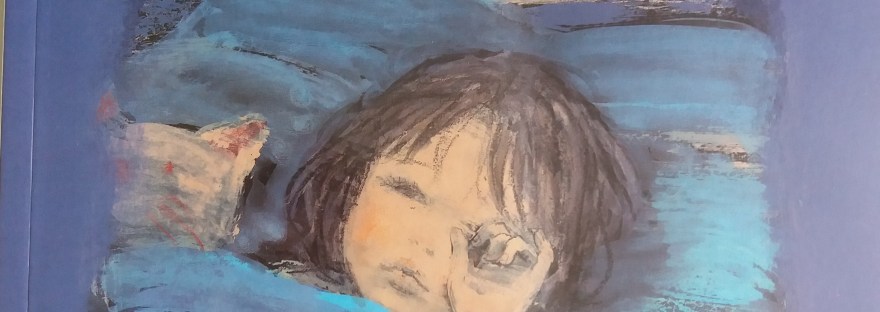
Day five and today we are reviewing a picture book that was originally published in Japanese: Hannah’s Night by Komako Sakai, translated by Cathy Hirano (Gecko Press).

Emma: I like it when she borrows her sister’s doll. I really like the drawings of the cat. The cat has green eyes.

This book was recommended to me on Twitter and when it arrived, I thought the muted front cover was a little dull, especially compared to some of the other brighter books that we had come across. Well, I was very wrong to judge the book by its cover. This book is a wonderfully sweet and simple story, telling of a little girl, Hannah, who wakes in the night to find everyone in her family asleep. She decides to go for a wander around the house accompanied by the family cat, Shiro. She eats some cherries from the fridge “without asking”, she giggles to herself as she borrows her sleeping older sister’s toys, eventually curling up and going back to sleep on her sister’s bed.

The illustrations are absolutely magical. The expressions and postures of both Hannah and her cat are heart-achingly accurate; the way the cat brushes up against little Hannah as she peers into her parents’ darkened bedroom. You can almost see her wobbling a little, holding onto the wall as she goes down the stairs. Having not instantly been drawn to the book, Emma now keeps coming back to this one. As the younger sibling, rarely allowed to touch her big brothers stuff, she particularly likes the idea of Hannah “borrowing” her older sister’s toys while she sleeps.

Just like The Field in day three, this is another book that reminds me that while we may be miles apart and live in different surroundings, in different cultures with different customs, there are so many experiences that we share.


Uncategorized

World Kid Lit Challenge Day Four

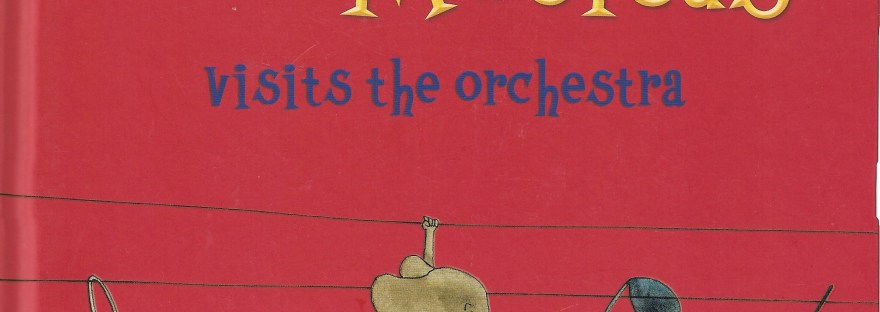
Music plays a large role in the life of our family and I was very excited to come across today’s book: Maximus Musicus visits the Orchestra by Hallfrídur Ólafsdóttir and Pórarinn Már Baldursson, translated from Icelandic by Dadi Kolbeinsson (Music Word Media).

Dominic: I liked the bit when Maxi tries to use his whisker to make a sound. And it tells you quite a few facts at the back. My favourite bit is that he thinks he’s riding a horse but actually he’s riding a beater. The CD makes it even better because the narrator does different voices for the characters and I like the music.

Emma: My favourite bit is where Maximus falls off the curtain and lands in the tuba. I like singing the song. 

This book was written by the principal flautist of the Iceland Symphony Orchestra. In the story, Maximus Musicus takes shelter from the snow and cold in a “sky-high building”, snuggling down to sleep, only to be awoken by an orchestra rehearsing for a performance of Ravel’s Bolero. Ólafsdóttir leads us round the orchestra, visiting each section in turn, introducing us to the sounds of the different instruments. The illustrations help the reader to visualise the different instruments and we enjoyed following Maximus Musicus on his adventure.

Where this book really comes into its own, however, is with the accompanying CD. The story really comes to life. Not only can you now read about the sounds Maxi encounters on his journey, but you can hear the different voices of the orchestra, with the narrator talking to us over the backdrop of Ravel’s masterpiece, Bolero. As well as pieces by Ravel, Copland, and Icelandic composer Kaldalóns, the CD also includes a track called Maxi’s song, with the music and words included at the back of the book. This is a VERY catchy little song and Emma hasn’t stopped singing it since we heard it!

My only word of advice would be that the CD recording is quite long (Bolero is quite a lengthy piece!) and for those with a shorter attention span, it may be too much. We listened to it in the car, which was great, but I’m not sure Emma would have sat still long enough otherwise.

Overall though, a great introduction to the orchestra!

Uncategorized

World Kid Lit Challenge Day Three

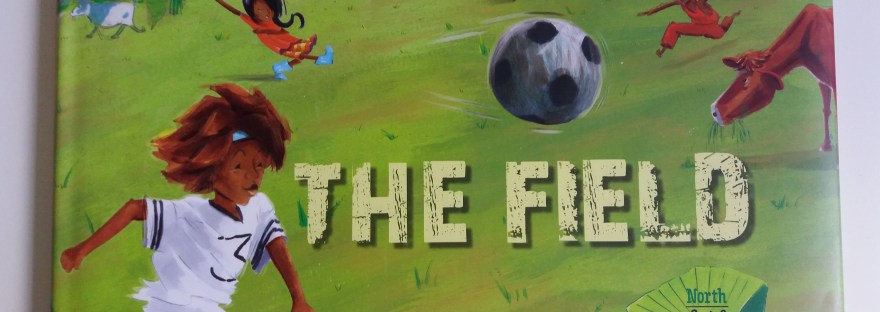
Welcome to day three of our reading challenge. Today’s book is the first of our titles that was written in English but is set somewhere very different to our own setting here in the Midlands. Today’s book is The Field by Baptiste Paul with pictures by Jacqueline Alcántara (NorthSouth Books).

Dominic: It’s got a few words in English and a few words in another language (Creole). They can still play football even though they are miles away from us. I like this book because it is about football.

Emma: I like the girl playing football in a skirt and wellies. The cows keep coming to eat the grass. 

The story line is a situation familiar to many of us: a group of kids out playing football. They clear the pitch, split into teams and keep on playing despite the rain until finally, one team scores. The kids are called in by their mammas, climb in the bath and go off to bed. It could have been Dominic out playing football with his friends, except the kids are black and the backdrop is Saint Lucia. On thing I particularly love about this book is that Paul embraces equality in a game that is often male-dominated: it is a girl who instigates the football game.

The zingy English text, which becomes part of the pictures, is interspersed with words in Creole, giving the book an extra spice and sense of the exotic. Dominic enjoyed looking at the back page where there is a section on Creole words and phrases with an brief explanation about growing up in Saint Lucia and the language. We then had to get the globe out and look at where Saint Lucia is.

I shared this and some other books with a friend from Zimbabwe and her four-year-old son. As a football lover, he requested this one first and as they went through it together, he pointed at the figures saying “that’s me”, “that’s daddy”. She commented how great it was for her son to be able to identify with the characters, as they rarely came across black protagonists in British children’s books. Looking through my own shelves, it is shamefully clear how right she is. For anyone wishing to address this imbalance, this book is a great addition!

Uncategorized

World Kid Lit Challenge Day Two

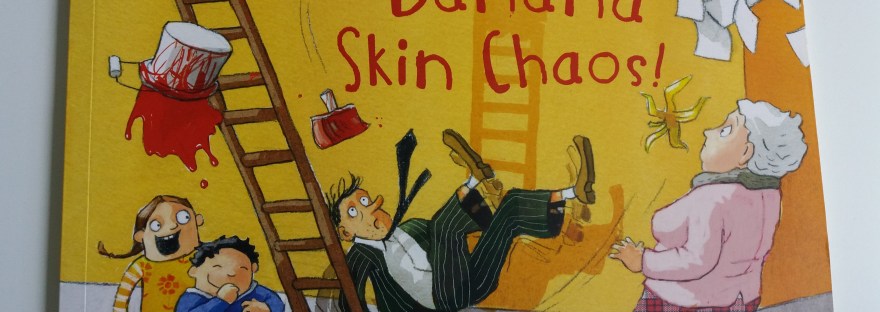
On to day two and today’s book is Banana Skin Chaos by Lilli l’Arronge, translated from German by Daniela Bernardelle (Bloomsbury).

Dominic: It is kind of silly because at the beginning, one man is slipping on a banana skin and it comes to the last page and there’s absolute chaos. There is something different to look at on every page. It is all set in the same background but it is very interesting. It doesn’t have many words. There is lots to look at in the pictures.

Emma: This is one of my favourites. It’s so funny when the snake eats the pig and the pot of paint lands on the man’s head. There’s also a pig riding someone else’s bicycle. It makes me want to read it over and over.  

The moment this book arrived, Dominic and Emma pounced on it. With a bright yellow cover (Emma’s favourite colour!), it’s really appealing. It takes the notion of a boy dropping a banana skin on the floor and the possible implications this could have. His female companion (is it his sister, mother, friend?) says, “just think what could happen”. Over the following pages, a whole series of unfortunate yet hilarious events take place involving paint pots, escaped pigs, zoo animals, flying cakes and even Superman and King Kong. Dominic and Emma delighted in seeing what had happened and changed from one picture to the next, the lens widening on each page, involving more and more people.

There was lots to discuss on every page and Emma, in particular, enjoyed showing her favourite bits to any visitors. We also enjoyed conversations about what might happen next, using their imagination to think about what else could happen. It’s one of those books we can look at time and again and notice something that we hadn’t seen before.